For our latest AOP CRUNCH, we invited experts from across the digital media world, including the platforms themselves, to discuss how to successfully create and distribute content for modern audiences and make money doing so. Our host for the day was Lucy Verby, the founder of We Are Masterplan.
What Gen Z wants from publishers, in their own words
Imagen Insights sources qualitative brand feedback from thousands of Gen Z, millennial, and Gen X participants who are paid to share opinions in their own words. AI models then parse this text into a queryable database that rapidly surfaces authentic audience sentiment without relying on the narrow and leading questions of typical consumer surveys.
Cat Agostinho, co-founder of Imagen Insights, demonstrated the platform’s utility with a series of questions around Gen Z’s use of and exposure to news, sports, and lifestyle media.
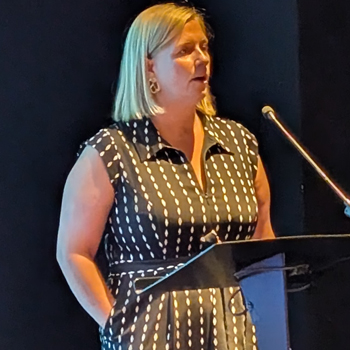
“The first [finding] is that discovery is not intentional,” said Agostinho. “Many people aren’t looking for particular content, the feed is putting it in front of them, and nobody actually described visiting a publisher on purpose. … Secondly, recognition is automatic. Most people could say the source of the content they were viewing, but no one volunteered that they trusted it. … Thirdly, attention is earned by relevance. When the content is personal or has that personal hook, that’s when engagement becomes a lot stronger.”
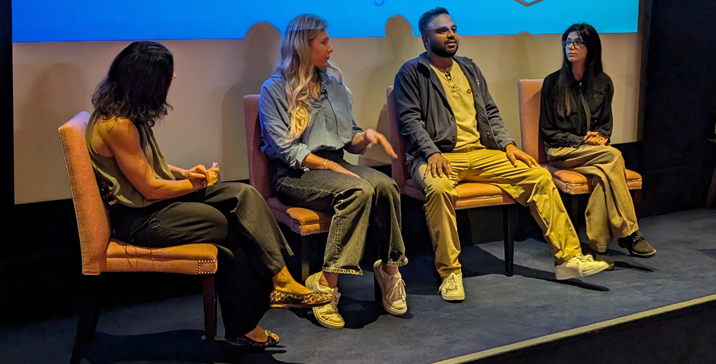
Agostinho invited three of Imagen Insights’ Gen Z community members on stage to share their views on media directly with the publishers in attendance. Among them, social media was the primary source for news and information, ChatGPT usage was ubiquitous, and all preferred a free-with-ads monetisation model.
Melissa Kuman, a nutritionist and content creator for Good Food, often finds herself connecting with brands that have an in-house social media personality offering a behind-the-scenes perspective that doubles as a personal hook for engagement. She recommends publishers emulate this approach with their own journalists.
“I came across this pyjama company recently, and it was because they had an in-house content creator and I liked her personality,” said Kuman. “Her hook was, ‘I'm trying to persuade my manager to take me to France for a shoot,’ and she had this whole presentation. I got drawn in and I liked it, then I followed the brand because I wanted to see her journey of whether she goes to France. So, I was like, ‘Oh wow, that’s clever how that’s worked.’ And now I’ve discovered a new pyjama brand through her.”
Sports coach Hamza Ash did not hold back on sharing his frustrations with open web publishing: “I want the headline to actually match the story. I also want integrity so you know you can trust the source, it’s someone that has a good reputation, not someone just looking for shock headlines or clout. I like if it’s well structured as well. If you look at the page, I want everything to be neat and in order, not everything everywhere; there’s advertising on the side selling products like magic pills that can get my hair back, I don’t like that. And I don’t want to have to sign up and give my details because I don’t want [scammers] to contact me.”
When asked what publishers can do to keep her around, Tulsi Dalal, a final-year accounting and finance student, spoke of her desire for participation, finding polls and quizzes irresistible while also wanting to read the discourse around the story or join the conversation herself.
“Quite a few publishers do this … they create a little community within their feed for people like myself to come and comment and talk to others,” said Dalal. “So, instead of headlines like ‘Three ways to control toddler tantrums’ they put ‘What is the most difficult thing about toddler tantrums?’ It then asks for us to come together and talk about it, knowing that I can relate to other people. So that’s one thing that I’ve noticed that some do, some don’t.”
YouTube and Substack have changed, opening opportunity for publishers
Next, we heard from media platforms directly on how publishers can monetise content and grow audiences. First to the stage was Janik Hoehne, strategic partner manager, film & TV at YouTube, who works with production studios, broadcasters, news channels, and many of the publishers that make up the AOP’s membership.
Hoehne described the changing nature of YouTube content, in particular looking across short and long form video, with the former being viewed primarily on mobile via the vertical YouTube Shorts format, and the latter watched on TV where there are higher expectations around quality and deeper engagement, with lengths of around 20 minutes being ideal. Hoehne recommends that long form content is clipped to create Shorts that audiences can watch on the go and that link directly to the full video for when they’re at home.
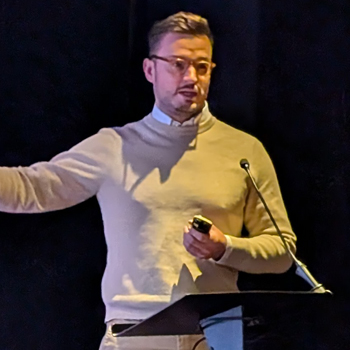
Publishers have a suite of options for monetising their YouTube content: pre-roll and in-stream programmatic ads; the YouTube Shopping affiliate programme that connects to select merchant partners; and Channel Memberships where viewers subscribe directly for a monthly fee. Premium publishers such as Channel 4 and ITV have partnerships with YouTube that allow them to sell ads directly within YouTube, leveraging their own sales teams and bundled multimedia offerings to secure far higher CPMs than typical auctions.
Hoehne gave a preview of an in-development monetisation option that offers a middle ground between programmatic ads and the full control offered to premium partners, where a permanent in-video ad directly sponsored by a brand can instead be a dynamic segment that can be swapped out for a new sponsorship:
“You are able to sell your whole set of videos, your whole catalogue, for a limited amount of time. So, if you want to work with, let’s say, HelloFresh, they can have a little segment in front of all of your videos for a month and, after that, you can go to market again and resell it. For publishers who have an evergreen back catalogue of content that is continuously generating views and watch time, this makes sure that that valuable catalogue is getting the appropriate money because it’s still generating viewership, rather than just the one-time payment when you publish the video.”
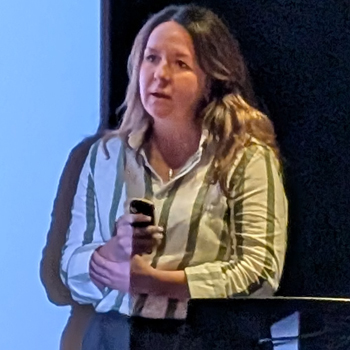
Emma Rowley, UK head of culture & news at Substack, stepped up to showcase the platform’s versatility for publishers as both a channel for audience growth and as a revenue driver. Since launch, Substack has branched out from newsletter subscriptions to include a social-media-like discovery feed, video and livestream capabilities, a dedicated podcast tab, and chat functionality.
As well as the app, where more than 2 million posts are discovered daily, publishers can leverage other growth features such as peer-to-peer recommendations to attract new audiences. The app has become the top source of subscriber and revenue growth for Substack publishers, and more than 50% of all subscriptions and 30% of paid subscriptions on the platform come directly from the Substack network.
Substack is an incredibly flexible platform. The Financial Times offers its irreverent Alphaville weekly blog for free to expose its brand to younger readers; Der Spiegel has a paid English-language Substack to monetise an audience it otherwise would not reach; while the subscription-only local news outlet London Centric is published entirely on the Substack platform, with its own URL.
Whichever way publishers utilise the platform, they retain full control over their intellectual property. Publishers are free to republish content elsewhere, and links to content published off-site are both permitted and not at all deprioritised in the feed. Perhaps most importantly, this freedom extends to the audience that publishers build within Substack:
“We talk about owning your audience,” said Rowley. “That means that your email list is yours to take away. We don’t want you to leave, but you absolutely can. You’re not locked into the Substack ecosystem the way you might be on a traditional social media platform.”
Reddit is the social platform that requires the most social skills
Reddit expert Ollie Wrighton founded his agency, We Are The Humans, to help brands and media partners build a presence among the network of communities that make up the platform, each of which has its own culture and etiquette. Understanding those communities, and how to credibly and authentically participate within them, can unlock a loyal and engaged audience along with the steady stream of referral traffic they bring.

In the UK, Reddit ranks third for social media usage when YouTube is excluded, and more than half of its UK users are female, a significant change from the overwhelmingly male and gaming-focused audience it began with. For publishers, Reddit offers large and engaged pre-existing audiences aligned with subjects they might already cover, whether those are news, entertainment, technology, sport, or far more niche interests.
Wrighton recommends starting small, creating clearly labelled official publisher profiles, or profiles for individual journalists that make their affiliation transparent, and “lurking” to learn community norms before scaling activity. By sitting back and observing, publishers can identify where their content resonates, then build rapport with moderators, who are teams of dedicated volunteers, to understand their guidelines and begin contributing within them.
Reddit is the ideal platform to allow communities to become familiar with the people behind a publisher. ‘Ask Me Anything’ (AMA) discussions are a tried-and-true format for gaining credibility, giving journalists a soapbox to share expertise and engage directly with readers. The balance between self-promotion, which is a massive Reddit faux pas, and engagement is very delicate. So, when posting, add additional context around a piece of content, or have the journalist engage directly with the community in the comments.
“If you’re behind a hard paywall, you’ll find that if you share an article in a community with just the link, you’ll get removed, maybe even banned,” said Wrighton. “The best practice is what we call TL;DR: too long; didn’t read. So, you post the article and you comment immediately below with a synopsis of what the article’s about, and then you could have a ‘read more’ hyperlink.”
While Ollie Wrighton recommends publishers track their progress with the metrics surfaced through Reddit Pro, much of what builds an authentic presence on Reddit is unquantifiable. Like subcultures within a city, Subreddits come with their own in-jokes, vernaculars, styles, and codes, and learning these is as essential to authentically fitting in online as it is in the real world.
How publishers are standing out in the infinite scroll
The morning ended with a panel featuring publishing and media leaders who are carving out a foothold in the shifting sands of algorithmic feeds.
Last year, Mail Metro Media launched New Media, its social publishing division within which a dedicated team of around 100 content creators work exclusively on publishing and monitoring short form video. New Media, where Mike Carrington is sales director, encompasses accounts that generate 5 billion views a month across more than 150 million followers.
Monetising short form video through brand partnerships provided an opportunity to insulate off-site revenues from algorithmic and policy changes, with Instagram and TikTok serving as the primary platforms. Audience growth and retention have been achieved through the use of personality-driven repeatable content formats designed to create the social equivalent of appointment TV, which also provides brands a reassuring level of predictability and performance guarantees.
“Creating content that repeats, has strong visual cues, has catchphrases, is instantly recognisable … helps cut through in the scroll,” said Carrington. “The rules that have been in play on YouTube for a long time are now playing in the short form video space. … A good example from a competitor is Snack Wars at LADbible. You see it and straight away you know exactly what it is, and it cuts through really, really well. Or Subway Takes, for instance, straight away the cue’s there, it has a prop that’s there all the time.”
For Dan Russell, director of social monetisation and growth, Reach plc, repeatable formats are as much a matter of managing scale as they are breeding familiarity with audiences. With 120-plus brands under the Reach umbrella, Russell oversees more than 1000 social media accounts, around a quarter of which are monetised through organic distribution with partnerships and sponsorships on top of that.
Russell leverages the hyper-localised nature of Reach’s brands to provide scalable content formats that are useful both to its audiences and the brands who want to reach them: “When we know there’s going to be a heat wave, we go, ‘Here are the five best ice cream shops in Manchester’. We will create a graphic on that, and that will be shared tens of thousands of times. And then an ice cream shop will come and say, ‘Can we sponsor that post?’
“… Every Friday, people like fish and chips, so we do the best local fish and chips. Every Sunday, people like a roast dinner, so we’ll do the best roast dinners. We’re in every part of the UK and Ireland, so it starts with one idea, but it’s replicable across every local brand. They all look different, but it is the same idea.”
Megan Hume, senior paid social executive at Bicycle, advises not just to adapt content to each platform, but how success is measured.
“Not all impressions are equal,” said Hume. “A view on Snapchat won’t be the same as a view on Reddit or YouTube. On YouTube, yes, it’s longer form content, but they could just be playing it in the background and not necessarily having that deep attention as you would with maybe TikTok, where it’s video-first and you’re on there to get education or information as well.”
Hume noted that this issue is compounded by social platforms providing their own metrics that aren’t directly comparable, making it difficult to communicate to brands what the true value of each impression might be.
“We are definitely moving more away from reach and impressions because, great, you have eyeballs on it, but does that actually convert into action? Does that actually convert into real attention? So, while the social platforms themselves provide a good indicator of that, ultimately, I think looking at third-party measurement too is really the only way to have a quantifiable measure of the impact.”
More information about the AOP CRUNCH series can be found here.