AI summaries are diverting once-reliable traffic flows while attention is split across platforms that serve content on the whims of an algorithm.
Our most recent AOP CRUNCH was dedicated to discussing how publishers can reclaim a direct relationship with their audience, educate advertisers on the value of a premium environment, and establish a fair value exchange with AI companies.
The day’s sessions were hosted by renowned commercial, growth, and operations leader Hannah Buitekant.
Hard data on what we all know: AI is suppressing publisher traffic
The morning began with an overview of the AOP’s ‘Artificial Intelligence Publisher Impact Study’, presented by David Buttle of DJB Strategies, the study’s author. Through a combination of behavioural testing of AI usage (courtesy of Ipsos) and traffic analysis from eight major UK publishing groups totalling 10.8 billion pageviews, the study reveals the impacts of AI on audience behaviour and referral traffic.

The top line finding is that organic Google referrals fell by 7.1% quarter-on-quarter in the first half of 2025, following an expansion of Google’s AI Overviews. Should this trend continue, referral traffic from Google would fall to half of its Q1 2025 levels by Q3 2027. AI Overviews are very likely to be the cause, as the study’s behavioural component found their presence suppressed clicks by 18%.
AI Overviews do appear to be at least partially designed to encourage referrals, with a third (34%) of respondents indicating they would click at least one link shown, versus 41% in a normal Google search. ChatGPT, on the other hand, is more likely to keep users in situ, with only a quarter (26%) of users reporting they would click through to a source.
Traffic impact is highly dependent on content topic or type. Guide / how-to content is most vulnerable to AI substitution, suffering a 20% decline in traffic, while interviews and opinion / commentary (which, by their nature, cannot be replicated by AI) increased by 1% and 4% respectively. Combining topic and type revealed acute areas of referral growth and decline: news interviews increased by 63%, while food and drink how-tos fell by 54%.
While AI interfaces suppress traffic, they also benefit from the trust that users place in the very same publishers most affected. There is a strong correlation between how much users trust the cited sources and how much they trust the generated answer. However, trust in the source does not increase likelihood to click through, as users feel satisfied with the generated answer they have received and don’t feel they need to explore further.
“If we play that forward and think about what incentives that’s creating, it’s going to have a detrimental impact on the level of referral traffic to the most trusted brands,” said Buttle. “This is really problematic and something we need to be alerting to society at large too, because if this plays out, then it’s not going to result in the information ecosystem we all want.”
Adapting content and commercial strategy to changing audience behaviours
“It’s about finding our audiences and meeting them where they are. At Immediate, we’ve taken a test and learn approach, being agile and learning quickly from those findings,” said Nina-Che Bousquet, SEO lead at Immediate Media.
Dedicated WhatsApp channels that lean into Immediate Media’s niches have been one such test, including a Good Food branded channel dedicated to baking: “It worked in terms of driving some traffic towards our websites. It’s a small piece of the pie, but the real test there is improving engagement within those communities with polls and even voice notes… which worked quite well and was low resource.”
That personal touch continued through experiments with Substack, where editors are encouraged to establish profiles as content creators and build their own communities, though Substack’s self-contained nature has made it difficult to move audiences over from web or social media. This same approach also allowed Immediate Media to gain a foothold on YouTube, leveraging individual personality and passion rather than brand recognition.
For Deepika Talwar, SEO manager at WIRED, the focus has been on quality over quantity and ensuring both editorial and commercial strategy focus on areas of the brand’s strengths: “It’s about doubling down on EEAT (experience, expertise, authoritativeness, trustworthiness) principles and people-first content.”
“We worked recently with our commerce team to conduct NLP (natural language processing) and vectoring analysis to put the data together for a business case of bringing commerce content back to categories that are core to WIRED’s brand… building a more direct and loyal audience who that content is then served to.”
Such loyalty is hard-won, and Amrit Baidwan, UK general manager of digital publishing at Bauer Media, believes it is at the heart of the deeply unequal value exchange between publishers and AI companies.
“Fundamentally, it all starts with a bit of respect for the work that we do, that our journalists do,” said Baidwan. “The brands, the relationships we have created, you don’t build that trust overnight; this is over many, many years. I think it’s important that within this ecosystem, respect for human creativity is put at the heart of it. If you think about the value that AI is deriving from the content that we are producing… quite often the return is some exposure. That feels really out of balance.”
It’s not just publishers who are having to navigate a changing landscape. When pitching Bauer Media’s commercial strengths, Baidwan puts herself in the shoes of CMOs, agencies, and advertisers who are also increasingly disintermediated from their audiences.
“The depth that we can go into, the access that we get, it’s not something everyone has. Very, very few people get invited to some of those rooms, and that’s why our audiences show up. That’s also important to advertisers, because they get access to those audiences and the opportunity to influence them in a way you don’t with just broad reach. So, we’re doubling down on that in our commercial conversations.”
Publishers can also help their advertising clients by strengthening their visibility within AI platforms. This has become a speciality of Simon Schnieders, founder and CEO of organic search agency Blue Array, who highlighted that earned media accounts for around 30% of all AI citations, which brands are responding to with increased PR investment.
“We do very granular reporting on how brands can improve their visibility within large language models, and we can recommend specific types of content that they need to then do digital PR around or get earned media around. We’ve seen some publishers taking advantage of this. Future is doing a great job with their GEO [generative engine optimisation] products and I think more publishers should get on board with this. There’s a huge opportunity here.”
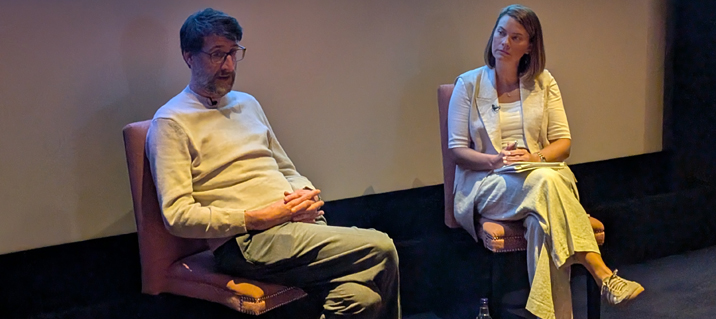
Future’s Simon Collis is confident in the value and power of publisher content
Simon Collis, SVP of games, technology and audience at Future, looks after around 300 journalists as well as Future’s audience function. Collis used to long for a less complex operation, but has since come to see it as a competitive advantage.
“Where we are today, I would much rather be in a position where we manage lots and lots of specialist communities, typically high intent, with a personality and a purpose and, if I can say, a right to exist,” said Collis. “There were definitely times in the past when I was like, ‘Oh, this would be so much easier if we just had two big websites.’ Right now, I would rather not have some big, generic sites, and having all those different specialists is really helpful.”
Along with cultivating highly engaged audiences, overseeing such a broad portfolio allows Future to conduct case studies and test commercial models within specific niches and then see if those same learnings can be applied to other properties. It also provides a wealth of insight on the general health of the open web ecosystem: “Some things affect one brand, then sometimes the whole portfolio moves in unison, which suggests it’s more algorithmic.”
Being able to recognise when a drop in traffic is a blip or a sign of structural decline has been one of the hardest lessons of Collis’s career, and one that he continues to see publishers stumble over.
“I think a lot of success in recent times is predicated on how long the gap was before you realised that growth is not coming back,” said Collis. “If you’re used to structural growth, then when you have a dip, your first instinct is, ‘We need to work harder’. I still see people going, ‘Oh, the problem is, you need to work harder on SEO, don’t give up’. And I’m like, those people do not understand the reality of business. You cannot work harder for a lower return.”
It remains to be seen how AI will affect publishers in the long term, but Collis believes they have more leverage than they might expect in the hotly contested value exchange with AI companies.
“We did some work with ChatGPT on what its responses look like if it can’t look at the web. Obviously, it’s rubbish, because it’s really out of date. Then there was a version where it’s not allowed to access Future sites, and what does that look like? It’s genuinely, materially worse, it’s substituting reviews content for what’s on apple.com… So what you’re getting is much more of a marketing message.
“I was at a dinner last night, and someone said that they’ve noticed their responses in Claude getting worse because more and more publishers are blocking it. There is less quality content in the world than you think there is. Therefore, we do have something that we can value, and that gives us a basis to work with in negotiations with AI companies.
“We’re so used to talking and thinking about tech giants like we’re just a speck on their shoe, they’re so huge. And actually, in this particular conversation, you know what? It’s not as easy to substitute our work as you think it is. We are more important than you think. So, somehow, you’ve got to tread the line. Don’t just think, ‘We’re so important, the internet can’t survive without us.’ That’s not true. But actually, we do have power.”
The Independent’s three-prong approach to protect and expand its standing
This year, The Independent marks its 10th anniversary as a digital-only publication and its 40th year in business. The company, which now encompasses a portfolio of brands including The Standard and BuzzFeed UK, is certainly no stranger to transformation, and Philippa Jenkins, its publishing director, shared how it is adapting to an increasingly AI-driven web.

First up was Bulletin, a spinoff website and app that leverages The Independent’s reporting to produce bitesize summaries of the news in bullet point form. It was developed in collaboration with Google Gemini, which is used to provide initial summarised copy, which is then checked by dedicated editors, giving audiences the convenience of an AI-driven experience backed up by The Independent’s trusted reporting and editorial oversight.
Next is e-commerce, one of the revenue streams most acutely affected by AI disruption. The Independent has pivoted away from the areas where organic traffic has declined towards categories that have the strongest audience connection, and thus growth potential. Along with capitalising on The Independent’s ability to pivot and diversify, Jenkins has found retail media partnerships to be “transformative” to its e-commerce strategy across both its own domains and off-site channels.
Finally, there’s Independent Studio, the publisher’s in-house multimedia production studio that enables content to be created for its owned and operated domains or any of the number of platforms where modern audiences now spend their time. This allows The Independent to keep up with media fragmentation, move with audience migrations, and bring its brands into the creator-led content ecosystem.
“Ultimately, we’re talking about what’s happening on platforms at the moment being spearheaded by faces, by people, by the idea of trust,” said Jenkins. “If you cannot put the information that you are receiving to a name, to a brand, and that crucial combination of the two, you are going to query that content that bit more. We are in a space and an environment where the combination of content creator and brand really cements that authority to a point where users will return.”
More information about the AOP CRUNCH series can be found here.