“Oh my goodness, oh my goodness. Oh my goodness, oh! Wow, oh my goodness. That is spectacular. It’s not just what you see and what you hear as a rocket lifts off. You can actually feel the force of it through your body. This is the most powerful rocket that NASA has ever built.”
And with that breathtaking description, BBC Science Editor Rebecca Morelle brought the wonder of Nasa’s Artemis II spacecraft launch in April directly to our living rooms.
As a piece of joyous, instinctive reporting, it was everything that journalism should be. Knowledgeable, approachable and a gateway to more wonders that were revealed as the crew circled the moon as part of a 10-day mission.
That space launch was just one of the big-ticket items keeping science journalism at the top of the news agenda. Other big science stories include the climate crisis and, by extension, drought and wildfires, artificial intelligence seemingly conquering the world as we know it and medical breakthroughs that help people around the world live longer and happier lives.
So, how does the science journalism community keep on top of it all? The Association of British Science Writers (ABSW) is tackling that very question head on. One of the key conclusions of ‘community assemblies’ held in July was that as AI rises and broader continuing digital disruption of legacy media continues, the science writing and journalism profession faces issues too great for individuals to solve alone.
“The views our community shared of how we see our profession evolving are striking and invaluable,” said Alex O’Brien, the organisation’s chair. “The ABSW has always sought to support those critiquing and communicating science. The assemblies now serve as a call to action for us to take our role to the next level and help us all collectively prepare for what’s coming.”
Across two two-hour meetings, attended by 59 participants, both ABSW members and people from outside the organisation joined the discussions. A further group made up of ABSW board members and externally recruited facilitators ran the event.
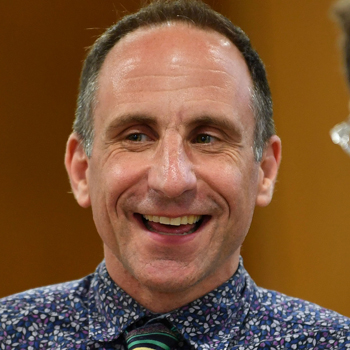
Andy Extance, a freelance science writer and ABSW chair from 2020 to 2026, was one of those facilitators at the community assemblies. He reported that the discussions revealed anxiety regarding AI and financial instability in the context of the loss of legacy media infrastructures.
“Participants highlighted a relentless wave of newsroom layoffs, pointing to recent culls and closures at prominent publications like Scientific American and Research Professional News,” he said.
“Additionally, some parts of society are growing more sceptical toward scientific evidence. The fragmentation of traditional media brands therefore leaves journalists more vulnerable in an information ecosystem overrun by unverified content and AI-generated misinformation.
“The groups therefore sought to establish how we adapt and differentiate ourselves. We have one advantage because trust is hard to come by today, meaning that relationships with people like us can help provide it.”
The challenges
Across both events, participants identified five broadly interconnected challenges:
- the rapid automation of routine journalistic work through generative AI
- changing audience behaviour and the shift towards social-first and video-first media
- growing financial insecurity and the weakening of traditional media institutions
- increasing difficulty in establishing public trust
- and the need for a stronger, more collaborative professional community
The discussions also suggest several potential priorities. These include:
- expanding training, mentoring and skills development particularly around areas needed for the new science journalism and communication landscape
- strengthening communication networks and building a more collaborative and supportive professional ecosystem
- increasing the visibility of journalists and helping audiences understand the value of their work
- supporting more human-centred, creative and narrative-driven journalism
- experimentation with new forms of public engagement and reporting
The in-person assembly most strongly supported lobbying for new funding models to sustain independent journalism.
“Specifically, it proposed a levy on social media platforms and generative AI companies such as OpenAI and Anthropic that have benefited from scraping journalistic content without compensation,” said Extance. “The revenue generated from these levies would be ring-fenced and funnelled to support newsrooms providing quality content and holding authority to account.”
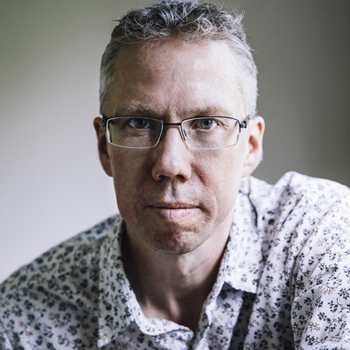
Jon Evans is one of those ABSW members gazing hesitantly into the future. Over a career stretching more than 25 years, Evans has written on a wide range of scientific subjects, from renewable energy to space travel to nanomaterials, for publications such as New Scientist, Chemistry World, Materials Today and Chemistry & Industry.
But now he has mainly switched to writing popular science books. “AI is already changing science writing,” he says. “There are fewer freelancing opportunities now, especially web-based and marketing-related. Why pay a science writer to summarise a research paper or write a technology briefing when AI can do it for free?”
He acknowledges that the importance of science journalism depends on the reader. “General readers think of science journalism as potentially interesting but not particularly important, compared with politics, world affairs or probably even sport, even though they know it covers areas of importance like the climate crisis.
“But the climate crisis is of diffuse importance, a kind of background emergency, rather than immediate importance. Readers with an active interest in science place more importance on science journalism.”
Last word from Rebecca Morelle: “But you just can’t take your eyes off this thing. You really just want to drink every moment in.”
But no, not more from the space launch. This time, our breathless science editor was taking in what the BBC called “a gift from the heavens”. Yes, the solar eclipse on August 12, another opportunity for science journalists to really show what they are made of.
Encouraging critical thinking
Alex O’Brien is ten minutes late for our Zoom interview. As she lists ‘poker player’ on her LinkedIn profile, I thought she might have got held up either counting cards or counting chips.
But, rather more prosaically, the chair of the Association of British Science Writers (ABSW) was dealing with a leak in her London home, while on holiday in New Jersey with a side-trip to the nearby casinos of Atlantic City also planned.
Would she prefer to be a full-time on the global poker circuit? “I don’t think so,” she laughs. “I need a bit more balance in my life.”

As well as leading the 700-strong, ABSW O’Brien is also chair of the Executive Organising Committee for the World Conference of Science Journalists (WCSJ2027) which will be held in September next year at Central Hall, Westminster.
This biennial event was last held in London in 2009, and this time, 1,000 science and technology journalists will meet under the theme ‘Strengthening science journalism through global networks’.
Writing on the conference website, O’Brien has a forthright message: “WCSJ2027 London has a clear purpose: to energise a global network of science journalists. Our profession is under real threat from misinformation, disinformation, and those who would silence scrutiny. Its future depends on our collective strength and unity. We’ve got a job to do. We start in London. Together.”
Expanding on that theme, O’Brien relates how when helping her 10-year-old daughter research the country of Benin for schoolwork, she encouraged her to explore where the “so-called facts” she found had come from and whether they could be trusted.
“We need to encourage critical thinking by asking the right questions. Don’t accept the first answer you are given. This will provide an antidote to all the ‘brain rot’ that is out there.”
Answering my perennial question of ‘will AI do us all out of a job?’ O’Brien counters with: “There will be a regression. We have to cling on to what it means to be human. Also, the legislation is playing catch-up with the tech so more changes are coming.”
After starting out in design, O’Brien has been a science writer for 15 years with work published by The Times, BBC, Scientific American, New Scientist and The Guardian. In her first non-fiction science book, ‘The Truth Detective’, shortlisted for two book awards, she calls on all of us to regularly interrogate the narratives and information we are given. “It’s a book on critical thinking,” she says.
O’Brien is particularly passionate about teaching critical thinking skills to young people. She spearheaded the UK Young Science Writer Award, which is aimed at students from state-funded schools to help encourage them into a career in STEM.
Elected this year for two years, O’Brien works alongside Honorary President Roger Highfield, now the science director of the Science Museum after making his household name as the editor of New Scientist magazine between 2008 and 2011 and the science editor of The Daily Telegraph between 1988 and 2008.
I wrote down that Alex O’Brien is a “force of nature”. Maybe that’s an injustice to both her and the natural world, but she is certainly so passionate and knowledgeable that science journalists should be grateful that the future is in such enthusiastic hands.
More info:
This article was first published in InPublishing magazine. If you would like to be added to the free mailing list to receive the magazine, please register here.