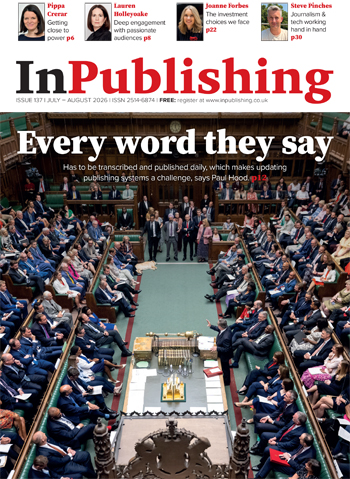
The July / August issue of InPublishing magazine was published last week (not yet on our free mailing list? Register here). Here are some of my takeaways from it, one from each article:
- Relationship building: “You live or die as a political journalist by your relationships.” (H/t Pippa Crerar, interviewed by Ray Snoddy)
- Finding growth: There is no point chasing reach and scale. Instead, focus on going deeper and super-serving your existing audiences. (H/t Lauren Holleyoake, interviewed by Ciar Byrne)
- Updating publishing systems: Don’t bet on a single disruptive leap. Instead, build the foundation carefully, modernise incrementally, and ensure that every improvement serves the core mission rather than complicating it. (H/t Paul Hood)
- Working with influencers: Pick ones that have a similar ethos to your own, and then resist trying to over-control their output, because they know best what works on their feeds. (H/t Emma Hartfiled, interviewed by Laura Silverman)
- In praise of iweekend: “A joyful agglomeration of days out, food & drink, books and arts along with a week’s TV and pages ... a refreshing treat away from the polemics of the other national newspapers. The news is told straight but also in depth, the columnists are clearly badged up with their affiliations and sport has some of the best writers around.” (H/t Alan Geere)
- Diversity: “Journalism is strongest when newsrooms reflect their communities and when a wide range of perspectives informs reporting and editorial decision-making.” (H/t Joanne Forbes)
- What success looks like: “A successful publishing business in the near future will be one that is creating revenue and thriving commercially. It will have fully embraced AI while maintaining its trustworthiness and retaining its core values. And it will be deeply embedded within its community – having built a deep understanding of its audience, who they are and what they want and shifted its products to attract a younger generation.” (H/t Ana Jakimovska, interviewed by Meg Carter)
- Three reasons why editors should never let PRs vet articles before they’re published: 1. Editorial integrity – we’re supposed to be the ones writing the article; 2. House style – suggested edits and changes will likely skew the tone of the piece; 3. Time – it introduces another link into the production chain, which complicates production planning. (H/t Dickon Ross)
- Embrace news creators: “People who get some news from creators consume more content from traditional sources, not less.” (H/t Jim Egan)
- Serendipity: “Publishers also need to be careful not to remove the opportunity for serendipitous browsing or lose sight of what makes their brand unique. The issue isn’t just that AI models tend to stick to answering within the specific personalised scope of the question, it is that users often don’t want any more than this. While this may be great for getting clear answers to defined questions, it eliminates the ability for users to stumble upon new information and discover new sources.” (H/t Steve Pinches)
- Not gospel: “Because AI tends to be bad at expressing uncertainty, it’s often not just wrong, but confidently wrong.” (H/t: A.G. Sulzberger)
- Relentless optimism: It is a CEO’s job as a leader to take people and lead them into uncertainty, and no one follows a pessimist! This is not naivety or blind optimism. We don’t need CEOs who stand on the cliff edge hoping they’ll sprout wings. This is about having a plan. (H/t Mike Soutar)
If you want to read the full issue, then please register here. Once you’ve completed your registration, you’ll be provided with a link to the digital edition.
You can catch James Evelegh’s regular column in the InPubWeekly newsletter, which you can register to receive here.