Everyone in the media has been enlisted in the war for attention. Audiences have no more hours in the day, yet the amount of content they have access to has ballooned with no signs of slowing, and now AI is on the march to take its share of people’s precious time. In our first AOP CRUNCH of the year, publishers shared their strategies for securing audience loyalty, and how this loyalty can be leveraged to build reliable revenue streams.
Our host was Greg Brooks, CEO of Hexagon Growth Marketing and storied publishing veteran, who generously gave us all a whole morning of his attention.
How Newsquest, GB News and Gumtree turn loyalty into revenue
For Susanne Kinnaird, head of digital reader revenue at Newsquest Media Group, the case for building audience loyalty is in both subscription growth and advertising revenue: “Newsquest’s markets are local. We have over 200 different local brands, then we have very specific demographics that we can reach within those brands.”
Strengthening direct relationships with readers helps the business capture first‑party data, drives repeat visits and improves their experience in ways that support subscription value. That data foundation enables Newsquest to identify and grow its most valuable returning audiences and build more predictable recurring revenue.
Newsquest’s commercial model is built upon the virtuous cycle between serving niche audiences and then making those audiences available for targeted advertising: communities who would otherwise be unserved in the media receive coverage and commentary, while brands gain access to the fine-grained segmentation that is so valuable in today’s atomised media ecosystem.
“As a local publisher, we have an obvious community with the local people that live in those areas,” said Kinnaird. “But then we can build local communities within that, around the content pillars that we focus on. For example, nostalgia is a strong one, especially for our demographic, there’s a lot of emotion involved in going back and remembering the past. Or there’s football, with the emotion of following teams and sharing that fan base, whether through the comments section or social media.”
While the advertiser-facing side of Newsquest is driven by smart data utilisation, its audience-facing side is very much personality driven: “Our audiences have direct connections with our reporters and with the newsrooms, particularly in sport. Our reporters build their own fan base, being both part of the team’s following and a point of expertise. They have a core conversation with those readers, and that’s what strengthens the community.”
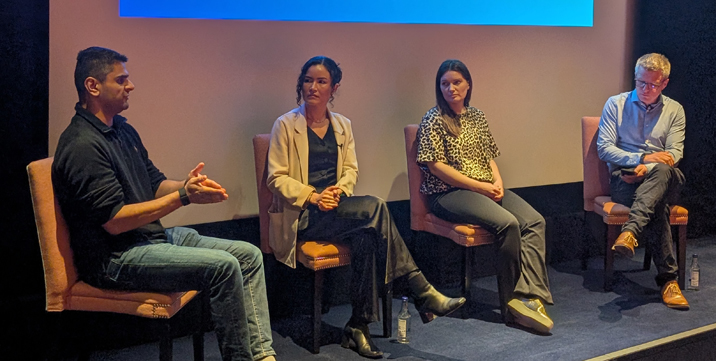
Elysse Jones joined GB News Limited as its head of community & growth with the remit of instilling this same sense of community across the publisher’s channels: “In the last six months, we changed our psychology from simply come, access our content, and register, to: come and join us to be part of something, to stand for something.”
“We recently launched a free community tier (Friends of GB News), where we strategically lowered the barrier to entry so we’re not just focusing on our paying subscribers anymore… Through this loyalty and this trusted environment, we can build higher attention and engagement, which then directly translates into first-party data. Those highly engaged audiences have a higher propensity to convert and act upon what is put in front of them. If they find that the content is relevant and it’s not intrusive, they’re more likely to engage with branded content or click on advertising.”
There is no community without interaction, and one of the major incentives to join Friends of GB News is the ability for a viewer or reader to vote in polls, leave comments, or interact directly with presenters live on air. Jones’ most recent addition has been a gamified experience where users earn loyalty points through maintaining daily streaks and other interaction milestones, complete with leaderboards.
“It’s not just passive consumption anymore,” said Jones. “It’s about building this community, then relaying identity and values to bring in that trust before we turn that into monetisation.”
As a marketplace, Gumtree has a very different relationship with its audiences than Newsquest or GB News, but the fundamentals of leveraging loyalty for commercial gain carry through. Without content consumption patterns to turn into audience segments, Nav Dhillon, Gumtree’s head of advertising, maps marketplace activity to life stages that represent valuable signals for advertisers.
“Creating trust with advertisers is about connecting to real outcomes for consumers,” said Dhillon. “From our perspective as a marketplace, a user coming to buy a sofa or a car or looking to move home, these represent real experiences. How can we integrate advertising seamlessly within those experiences? The conversation moves away from just ad impressions to reaching key life decisions or changes for a consumer.”
Competition between online marketplaces is fierce, with incumbents like eBay and newcomers like Vinted just a click or a tap away if the user encounters friction on Gumtree. Instead of content or community, audience loyalty on Gumtree hinges entirely on the user experience.
“Users can do everything they need in just two steps,” said Dhillon. “Obviously, from my perspective, this hinders me because I’m after the ad revenue but, at the same time, it’s the right thing to do, and that’s what users expect. The balance has shifted from when programmatic was the majority of our revenue. Now it’s only 25%. Most of our revenue is direct or retail integrations or general partnerships. That’s where we’re trying to focus because it lends itself to more what I’d call ‘good advertising,’ which is seamless and less about the metrics.”

Why PlanetSport’s chief commercial officer puts guardrails around himself
For the second session of the day, George Odysseos, chief commercial officer for PlanetSport, sat down for a fireside chat with Catherine Murray, head of partner services at Utiq. PlanetSport partnered with Utiq to implement its telco-powered and cookie-free identity framework, which allows individual consented users to be identified at scale without any registration required.
For all the morning’s talk of carefully crafted engagement funnels, Odysseos emphasised that loyalty is ultimately won or lost on content quality and authenticity, which he is confident generative AI cannot match: “One of our big writers on Football365, Dave Tickner, he’s a Spurs fan, and he writes the most scalding pieces. They resonate because he’s talking from here,” Odysseos patted his chest.
“I think that’s reflected in the content. Who knows where AI might end up going, but when you see AI generated content, you can spot it a mile away because there’s no emotion to it. We write to engage, to tap into the emotions of sports fans, otherwise it’s too generic and bland. We want to provoke reaction. An engaged audience is the most valuable thing a publisher can have.”
Digital publishers have been walking the tightrope between commercialisation and user experience since the first banner ad. To ensure he doesn’t upset the balance, Odysseos puts guardrails around, of all things, himself.
“One of the worst things a website can do is give too much control to commercial people over what goes on to a site and on to a page,” said Odysseos. “We would fill it with pieces of 1x1, because it’s gonna make us loads of money. So, I recommend the protocol internally that I am not the decision maker. I can make a business case, but everyone else is the gatekeeper to what gets integrated. I’m really pleased with that.”
Few fans stick exclusively to a single sport. For example, Odysseos’ primary passion is football, but he dabbles in F1 when there’s a Grand Prix on. Odysseos leverages the broad interests of sports fans to keep visitors within the PlanetSport bubble, united by a single registration across all domains.
“We cross promote within our sites; it’s an important source of traffic,” said Odysseos. “One of the biggest goals for publishers (for me in particular) is, can we get an extra page out of a user? Rather than throw in two extra ads, if I can get another page, then I can serve them another four or five ads… We use the network to cross-promote, with content recommendations widgets where we’ll promote stories from the rugby side to the football side and the F1 side.”
Despite the commercial incentives to fostering audience loyalty, Odysseos noted that a reduction in the “tech tax” shaved off every transaction between advertisers and publishers would make the biggest difference to PlanetSport’s bottom lines: “On average, for every ad pound or dollar that goes into the system, we probably lose 60%, sometimes more. If we could recover 20% of that, it’s a massive difference.”
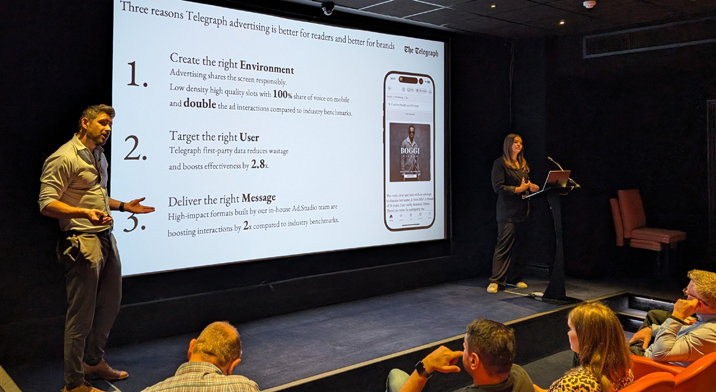
The Telegraph’s zero-party data strategy proves the power of the poll
Back in 2019, The Telegraph switched gears from being primarily ad-funded to being subscriber-first, flipping its commercial priorities from maximising volume to cultivating loyalty. For Gareth Cross, senior director of digital solutions at The Telegraph, this transition meant serving an audience of paying customers with very different expectations around advertising compared to the free visitors that once made up the bulk of their readership.
The Telegraph rebuilt its advertising model around fewer, higher-value placements aligned with subscriber expectations. Putting users at the heart of every commercial decision meant every proposal had to be backed up with proof that it would not undermine subscription growth or reader satisfaction. “If I can’t prove that I’m not about to harm the subscription business, I’m not going to get any traction whatsoever,” said Cross.
The result has been an advertising environment that readers are willing to accept: “Strangely enough, they don’t mind advertising. They just don’t like it blocking the thing that they’re reading.” In 2022, when advertising was introduced into the publisher’s app, its most engaged platform, Cross noted that the team didn’t get a single complaint.
This focus on user experience was one part of a two-pronged strategy, with the other being an expanded focus on data, leaning heavily on authenticated users and declared information, neither of which would be available without loyalty. Rachel Cottis, head of data-led advertising at The Telegraph, outlined how the publisher deploys a combination of observed behavioural signals and data intentionally shared by readers.
“Zero-party data is where the reader is explicitly giving their data to you,” said Cottis. “It differs from first-party data, which is typically observed.” The Telegraph maps its more than a million subscriber IDs to declared signals, while avoiding third-party data altogether due to its poor accuracy and questionable provenance. Declared responses are cross checked against actual behaviour to ensure accuracy before being translated into commercial audience segments.
The resulting detail is incredibly intimate and the basis of The Telegraph’s newest launch for advertisers: Telegraph CUES (Connected User Engagement Signals). On-site tools such as inflation calculators capture spending intentions, economic confidence, and other data far beyond what traditional behavioural tracking can capture, with all uses disclosed and consented. Reader polls can capture purchase intent in lifestyle sections, giving advertisers access to self-declared in-market consumers; the gold dust of targeting signals.
“We can also run client specific polls,” said Cottis. “We’re running a test at the moment for a finance client where each of the three responses to the poll directly feed into each of their three target audiences. There’s legal and editorial disclaimers on the polls and there’s no incentive to fill them in and yet people still want to interact with us.”
Through its subscriber-first transformation, The Telegraph has managed to have its cake and eat it too: subscribers provide a reliable source of recurring revenue, while the data they share makes its decluttered advertising products more lucrative. The day’s discussions showed that if publishers plant seeds of trust, respect, and community, they can reap the rewards of loyalty year after year.
More information about the AOP CRUNCH series can be found here.