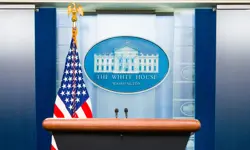
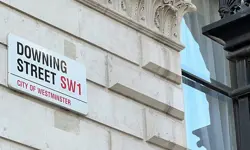
For a week that began with the third anniversary of Putin’s bloody, illegal invasion of Ukraine, will see the prime minister on Thursday meet President Trump face to face and attempt to persuade him to row back on his bogus blame gaming betrayal of President Zelenskyy and the Ukrainian people. For Starmer (and France’s President Macron who precedes him to the White House) it will require the odds-beating heroics of Cruise in full Mission Impossible mode to succeed, combined with diplomatic / geopolitical high wire skills par excellence. To borrow the title of Tom Cruise’s career-launching movie, it’s certainly a ‘Risky Business’ with the most transactional POTUS in history.
But for once, Sir Keir will have the best wishes of the majority of the UK media and political opponents (even if Nigel Farage’s Reform party are dancing on the head of the proverbial pin for fear of offending their populist Trump / Vance / Musk allies). The weekend electoral success of Germany’s extreme far right AFD party — lauded and courted by both US VP Vance and Elon Musk — won’t help the Starmer / Macron missions.
Fleet Street’s reaction to Trump 2.0
The British newspaper previews make a story in themselves and a guaranteed study for political and media historians when they look back on whatever the fate of Ukraine, Europe, the UK and NATO turns out to be in the wake of the Trump 2.0 presidency and his efforts to transform a mass murdering pariah Russian tyrant into “peaceful” pardoned and profitable partner.
Take Sunday’s UK nationals, for example. ‘A game of tact to win round the wrecking-ball president’ was the headline on the Sunday Times leader. Its opening paragraph spoke volumes: “In 2007, Vladimir Putin stood before European leaders at the Munich Security Conference and spelt out his contempt for the western order. The Russian president said the ‘unipolar world’ that had seemed to beckon after the Cold War — a world underpinned by European values and American might, bound together by multilateral organisations such as NATO — would never work because it would destroy itself from within. Few would have bet that, less than two decades later, a US vice-president would issue a similar message. But JD Vance’s speech at the same event this month... laid bare a world view that seems to align the White House with the Kremlin.”
The leader continued: “Donald Trump last week swung his administration wrecking ball harder at the post-1945 order. The 47th president accused Ukraine’s President Zelenskyy of starting the war launched by Russia, branding him a ‘dictator without elections’...his parroting of Russian lies about Zelenskyy will have particularly delighted Putin, who is finally seeing his dream of a divided and squabbling West materialise. This backdrop adds complexity to Keir Starmer’s meeting with Trump in Washington this week. The prime minister must find a tactful way if impressing on the president that emboldening Putin would not be in the US’s interests. Starmer would also need to emphasise that the UK and Europe are ready to do the heavy lifting of providing Ukraine’s post-war security guarantees, with some form of US backstop.”
The leader also cited a guest column in its own pages by UK Defence Secretary John Healey warning, “an insecure peace would only bring more war”.
Starmer in the ST
Significantly, the prime minister himself chose the Sunday Times Murdoch stablemate The Sun to write his own guest column on Sunday, carefully echoing Ronald Reagan’s famous slogan ‘Peace Through Strength’ — which could be read as a thinly-veiled message to those US Republicans wary of Trump’s own dictatorial ambitions and determination to bring Putin in from the cold.
Certainly, the ‘game of tact’ the Sunday Times leader headlined has been in play with Starmer and his senior ministers’ (under strict orders) strategy of pledging the UK’s continuing support for Ukraine without directly attacking Trump personally or calling out his barrage of lies. Whether that tactical tightrope walk can survive Starmer’s Oval Office meeting with Trump — let the alone the obligatory joint press conference afterwards with global coverage and hardnosed questions being fired — is another matter. Trump’s ability to take aggressive, off-the-cuff offence at being challenged is a powder keg.
Opposite the powerful Sunday Times leader, leading columnist Dominic Lawson delivered an excoriating indictment of Trump’s handling of the Ukraine crisis under the headline: ‘Trump will pander to Xi just as he has to Putin’. It ended with Lawson floating the idea that Ukraine should rebuild the nuclear arsenal it voluntarily surrendered with the end of the Cold War and its escape from Soviet Union domination.
The Observer led its front-page report with the headline, ‘PM lays down Ukraine peace demand ahead of Trump talks’, predicting Starmer would insist Ukraine and Europe “must be at the heart of negotiations” and not excluded the way they have been thus far. Whether Trump and Putin take any heed, who knows? But no arguing with the Observer front page depiction of Thursday’s White House meeting as representing the biggest test of Starmer’s “diplomatic and negotiating skills in his prime ministership, by far, as he tries to retain good relations with Trump while making clear the UK and Europe’s red lines on Ukraine and Russia.” Whether our ‘red lines’ and Trump’s ‘red lines’ are reconcilable will ultimately be decisive factors in the future security of both Britain and Europe.
Old news?
Foreign Secretary David Lammy, with his championing of increased sanctions against Russia, will be in the room when Starmer and Trump meet. No doubt Trump team hardliners will remind him (if he even needs reminding) that Lammy once branded Trump a “deluded, dishonest, xenophobic, narcissistic, neo-Nazi sympathiser sociopath” who was “no friend of Britain”. Remarks he’s been desperately and pathetically trying to dismiss as “old news” since being in government, but if it suits Trump to revive them, he most certainly will. If Lammy’s verbal contortion conjures up thoughts of Private Eye’s famous ‘Pass the Sick Bag, Alice’ jibe, ditto our new US ambassador, Lord Mandelson, taking to the Fox News airwaves to apologise for not dissimilar past portrayals of Trump.
The added risk here is, according to my sources, Elon Musk is pressing Trump to include him on the Starmer meeting. Given Musk’s recent history of wildly hostile personal rants about Starmer and the Labour government, Downing Street will be privately praying this is one occasion when the president doesn’t indulge his richest and most influential ally.
Back to the Observer who also predicted the PM will almost certainly speed up his commitment to 2.5% of GDP going on defence (he may need to go further to 3%) to try and placate a POTUS who is talking in terms of a crippling 5%. Starmer will have less trouble playing to Trump’s vanity by using the trip to extend Trump an invitation from King Charles for a swift state visit to the UK and the opportunity to address a full gathering of parliament, according to various newspaper reports, based on well-sourced government briefings.
For its part, the Observer’s main leader, headlined, ‘A dangerous new international order is unfolding’ echoed much of the same tone as its conservative counterpart, the Sunday Times. It argued Trump’s behaviour has “strengthened a consensus, current among western politicians, diplomats and analysts that the world is reaching a turning point, that the UN-led, rules-based, multilateral system is crumbling, and that a new era of great-power imperialism fuelled by authoritarianism, hyper-nationalism and right wing populism is unfolding.”
The paper’s chief political columnist Andrew Rawnsley posed the key headline question: “What can Keir Starmer say at the White House that Donald Trump might listen to?”
Ever the realist, Rawnsley wrote: “Number 10 lobbied hard to get Sir Keir across the Atlantic early in the second term of Donald Trump and, until recently, Downing Street people were telling themselves that the encounter between the two men needn’t be a disaster and might even turn out to be a success. In the weeks since Trump’s re-election as US president, UK policy might be summarised by the phrase ‘Don’t poke the beast’. Keep the temperature cool. Ignore provocations. Attempt to trade on British heritage — golf, the Royal Family — with which the US president has an affinity\... While trade threats have been made against China, the EU and America’s neighbours, ministers still hope the UK has a fair chance of dodging the tariff bullet. Nobody sentient in Number 10 or the Foreign Office is relaxed now. Not after what has been unleashed over the past 10 days. As a doctrine, ‘Don’t poke the beast’ only worked for so long as the beast chose not to bite off your legs regardless.”
Despite Rupert Murdoch’s continuing proximity to Trump (recently pictured in the Oval Office with him), The Times has taken a consistently supportive role for Ukraine, exemplified by its February 20th leader headlined ‘Pariah State’ and declaring “Donald Trump’s claim thar Ukraine started the war is absurd. Valdimir Putin’s Russia is a criminal enterprise deserving of continued punitive sanctions.” The Times February 21st leader headlined ‘Darkest Hour’ and arguing, “Volodymyr Zelenskyy has proved to be an inspiring war leader; but is now facing his greatest test as his crucial ally, the United States, threatens to cast him to the wolves.”
Mail changes tack
When academics come to write the media history of the UK in a Trump-exploded ‘New World Order’, the role of the Mail titles will deserve special attention for its shift from broadly welcoming Trump’s return to power to more recent headlines like, ‘Why such vicious animus against Zelensky? Trump is jealous of him’. Or ‘Time for the UK and Europe to end their navel-gazing and hand Russia’s frozen billions to Ukraine’s noble cause’. Or the front-page splash of February 20th, ‘TRUMP APPALS WORLD WITH ‘DICTATOR’ BLAST AT ZELENSKYY’. Or ‘What REALLY makes the tough guy US President seem like putty in Putin’s hands? On Valentine’s Day’, the Mail’s cooling romance with Trump 2.0 on display with a front-page headline, ‘Trump accused of ‘appeasement’ over peace talks with Putin’ promoting a highly critical 3-page special inside.
On February 20th, the paper’s main leader headlined; ‘Ukraine sell-out is a reward for tyranny’. Alongside it an op-ed column by Stephen Glover, hardly a woke-championing liberal luvvie, headlined: ‘Trump terrifies me. But he’ll do Britain and Europe a favour if he forces us to defend ourselves properly’. In line with that, the Mail has run a couple of guest articles by very senior (retired) military top brass not only arguing the case for hefty defence budget hikes but floating the notion Britain might have to consider the return of conscription against the threat of Putin’s Russia.
When academics analyse the Mail’s shifting stance, the role of star columnist and former PM Bris Johnson will deserve special attention. Before the US election, Johnson had struck a sycophantic tone lauding Trump and repeatedly rubbishing the idea of him betraying Ukraine and confidently forecasting Trump 2.0 would surprise the world with a tough policy of support for Zelenskyy and Ukraine. As recently as last Saturday, Johnson still appeared at odds with the Mail’s shifting stance with his regular column headlined, ‘Trump is NOT betraying Ukraine. But it is time for Europeans to... Stop panicking, stop whingeing-and step up’. The column also tap-danced around the Trump administration’s dismissal of Ukraine ever gaining NATO membership (arguably the US president surrendering the West’s best bargaining chip with Putin) despite Johnson loudly championing NATO membership as crucial throughout Boris’s own premiership. Next day, there was a partial reverse ferret when he posted on Musk’s X platform that it should be up to Ukraine to decide on whether it should join NATO.
It was a sign, however, of Johnson’s conviction he can yet stage a future Churchillian comeback to Downing Street that he popped up on camera unexpectedly in Kiev on the anniversary of Russia’s invasion to claim the Ukraine mineral deal Trump is demanding — and Zelenskyy is unhappy about — will be signed in a couple of days. If the Ukraine president and his people have had time amid Putin’s missile and drone onslaughts to study Johnson’s more recent columns, he just might lose some of the ‘hero’ glitter they for so long gratefully accorded him.
King or Emperor?
Finally... in a column for InPublishing online immediately after Trump’s hefty election victory, I forecast that the man I once knew well personally would become the nearest thing to a King, an absolute monarch, America has known since George III lost the War of Independence. I felt a little prophetic last week when the White House released a mocked-up image of The Donald in a crown captioned ‘Long Live the King’. Since then, The Economist magazine has applied the K-word to Trump, along with a few other publication and platforms. But on reflection, I was wrong. With his declared designs on Gaza, Greenland, the Panama Canal, even Canada as the 51st state of the US, the right word should be Emperor, with ambitions of imposing an empire wherever it fulfils his lust for power and a world reshaped in his (and Elon Musk and JD Vance’s) ultra-populist, transactional idea of what the world should be.
Let’s hope both Macron and Starmer are alive to that danger when ‘King Donald’ grants them audience in his White House ‘palace’ this week. But the headline-seizing relative success of the far right, arguably neo-Nazi AfD party (publicly lauded recently by Vance and Musk) in Sunday’s German elections certainly won’t make their task any easier.
Invoking Churchill
Hopefully Sir Keir will find time to study a wise Tuesday Times column by former Foreign Secretary William Hague on the flight to Washington, headlined, ‘Starmer must invoke Churchill to woo Trump’.
Pointing out that Trump is a Churchill admirer who restored his bust in the Oval Office, Hague advises the PM to “build on the good relationship he has forged with Trump and remind him, subtly or bluntly, that Britain is usually America's most reliable ally… when Trump the fighter pilot flies into battle, he will often find he has only one wingman, and he lives in Downing Street. Glance at those intelligence briefings Trump might notice that a great deal of the information arises from US/UK Co-operation. Even France would not come close.”
But Hague warns that Stamer will need to “get to the crunch” with the president. “In seeking an end to the war in Ukraine by making rapid concessions to Russia, Trump is on the verge of a historic error. Making that clear risks a bad meeting. Failing to make it clear risks a very bad world. At least Churchill, in the form of a bust, will be present in the Oval Office. Trump admires Churchill greatly. The PM might wish to explain what this great predecessor said about a parallel situation in history, the abandonment of Czechoslovakia in 1938. The belief that security can be obtained by throwing a small state to the wolves is a fatal delusion. It would be a mistake to blunt this message. If Churchill could speak, he would repeat it. If Starmer doesn’t make the case now, he will always regret it when future generations ask what he said as the security of Europe disintegrated in 2025. Giving in to Putin will embolden him in the Balkans, the Caucasus, and the Baltic and China, North Korea and Iran will note the weakness and unreliability of the West. It would be a miscalculation of the highest order. We should not underestimate the challenge of having such a conversation. Chillingly the president does not seem to recognise who is the aggressor in Ukraine. For Zelensky to say that Trump was living in a ‘Russian disinformation space’ was undiplomatic but it may well be true. This is all the more reason for the prime minister to describe reality as he sees it.”