


Why print’s still worth it
Print remains a central part in many publishers’ long term strategies. James Evelegh explains why…
Newspaper design carries challenges that magazine designers rarely face. Daily deadlines, variable content lengths, late-breaking stories, advertising constraints and pagination that can change hours before press time. The best newspaper designers create flexible systems that accommodate this unpredictability while maintaining visual coherence.
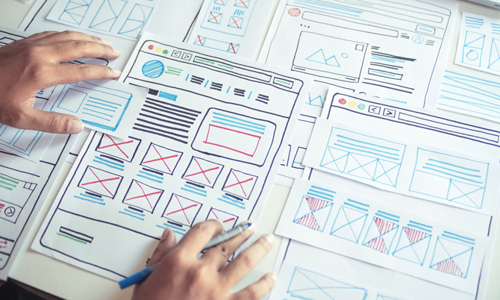
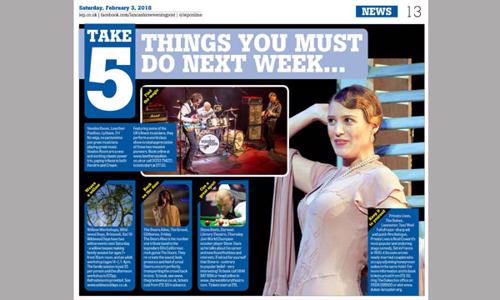
Newspaper layout has had to evolve as reader habits have shifted. Time is shorter, eyes travel faster across the page, and breaking news belongs to the phone now, not the front page. Readers pick up a paper now for context, considered reporting and a sense of what matters. Design has to support that shift, presenting content as a visual mosaic rather than grey columns of text.
The way we look needs to keep evolving and our appearance can become outdated very quickly.
Peter Sands Does your newspaper look tired and out-of-date?
Many titles haven't been properly redesigned in decades, even as their readership and competitive landscape have transformed. A newspaper designed for 2005 readers doesn't serve today's readers, yet redesigning a daily title with all its production constraints requires careful planning and editorial buy-in. The regional and local press faces particular pressure, with shrinking pagination and centralised production changing what's possible.
Digital adds another dimension to newspaper design. The newspaper layout that works on a broadsheet doesn't translate to a phone screen. Publishers need design systems that serve print, tablet and web without tripling the production workflow.
Below you'll find some of our best feature articles on the subject, from practical redesign guidance to case studies and expert interviews, alongside our latest news and industry commentary.
If your last redesign was over twenty years ago, then it probably does. Newspaper redesigns used to be a common feature in the industry, but now, all attention is on digital. But, if your print product still matters, then so does its design.
National World has not just redesigned its metro titles, writes Tim Robinson, it has completely rethought the age-old daily format for the modern reader.
Welcome to our latest special feature, this time looking at all aspects of content production and UX. All of the insights and opinions come from leading suppliers to the publishing sector and from senior executives at UK publishing companies.
A picture is worth a thousand words, as the saying goes. Some MailOnline stories have more than a 100 pics. You do the maths! Peter Sands looks at the impact of pictures in news media.
When it comes to image quality, publishers tend to put much more effort into pictures that appear in print than those that appear online. This, says Pixometry's John de Jong, is a mistake and one that can be easily avoided.
The reading experience served up by publishers ranges from the very poor to the exceptionally good, with the difference partly explained by the presence of on-page clutter.
Welcome to our first publishing workflows special, an extended feature taking an in-depth look at all aspects of the content creation process. All of the insights and opinions come from leading suppliers of publishing software & from senior editors.
Hyper local newspaper publisher Gary Cullum is a director of The Newspaper Awards and has been chairman of the event’s judging panels for 28 years. Ahead of the upcoming awards, he answers our questions on newspaper industry trends.
With the rise of digital, few journalists now give much thought to typography, preferring to leave it to the tekkies. This is a shame, writes Peter Sands, because font choices can make all the difference to the success, or otherwise, of your title.
In regional newspapers, publishers are faced with massive structural changes as the internet continues to evolve, coupled with constantly challenged resources. Johnston Press’ Tim Robinson explains how and why editorial design is evolving across the
Print remains a central part in many publishers’ long term strategies. James Evelegh explains why…
The right picture elevates a story, increasing views and view time. The wrong picture does the opposite. What’s the secret of taking great pictures and video? We ask InFocus Moments’ Seb Evans.
Print offers focus, depth and credibility in an age of constant digital distraction, says Denmaur’s Danny Doogan.
Following a review of its European print operations, The Guardian has appointed Roularta Printing as the new production partner for Guardian Weekly.
The task for publishers is to turn AI advances in image creation and editing into repeatable workflows. Derek Milne, commercial pixometrist at Pixometry, explains how this can be done.
Publishers wanting to harness the true potential of AI around workflow efficiency, should approach implementations strategically. Tom Pijsel, VP product management at WoodWing, explains how this can be achieved.
James Evelegh picks out some of the many top tips from InPublishing’s recent ‘Celebration of Print’.
Earlier this month, the New York Times announced the appointments of Kate Elazegui as head of product design and Matt Raw as deputy head of product design.
The purpose of this special feature is to remind us of print’s enduring appeal and to garner insights and tip tips from leading publishers and suppliers on how to execute profitable print publishing strategies.
Print is no longer the default. It’s the premium format. It has presence, weight, and staying power, says Mike Hoy, CEO of Papermule.
Despite seeing digital as the principal route to market for its newspapers, Iliffe Media still sees a long future for print, says Ian Carter, chief operating officer.
The two main areas where attention should be focused on are paper & inks and energy, says Steven Renders, general manager of Roularta Printing.
A unified editorial process reduces admin overhead from a set up and support perspective, says James Hirsz, project manager at Atex.
Times Media names Tim Shearring as design and brand director.
Gary Cullum, chair of the judging panel, looks at what some of the winning entries tell us about the key trends impacting the printed newspaper sector.