I remember once buying magazines for my children when they were little – they roundly rejected the educational editions I was suggesting and demanded the ones with the dolls on the front. The legs had fallen off the dolls by the time we got home, and dolls plus magazines went straight in the bin.
At Immediate, our covermounts have always been good quality. But my memory speaks to the challenges around producing appealing and sustainable magazines for children; and we have spent the past two decades addressing these issues. Using the best information available to guide our choices, collaborating and adapting where necessary, we have made measurable progress. Along the way we have learned lessons that we’re delighted to share.
We’ve always tried to be responsible publishers, and in the 1990s, many of our titles were early adopters of certified paper. We were members, for several years until its closure, of the World Wildlife Fund Global Forestry Trade Network, which shared expertise on purchasing sustainably harvested wood for paper. Our innovative ethical sourcing programme, auditing and grading the factories which produced our branded products, was set up in 2007, prior to BBC Magazines being merged with Magicalia to form Immediate. Now we still use the same criteria for working with our covermount suppliers. Since then, as interest in and knowledge of environmental sustainability increased, we have developed a robust methodology to measure and reduce our carbon footprint, set up company-wide Changemakers groups, and embedded sustainability at the core of Immediate’s business.
Covermounts
In 2019, as one of the founders of The Children’s Forum, a coalition of leading publishers, we put a spotlight on ensuring our magazines are environmentally sustainable whilst retaining the joy and learning they offer to young readers. A unique feature of children’s magazines is, of course, the inclusion of covermounted products to enhance the offering. The PPA had estimated that covermounts could account for between a third and a half of each magazine’s total carbon footprint, so we chose to focus attention in this area. We started by taking out harmful, non-recyclable substances, such as glitter, from our covermounts, and by increasing our use of recycled materials – which rose from 4% (2022) to 34% (2023) and reached 56% in 2024, far surpassing our initial ambitions. Between 2022 and 2024, the carbon emissions of an average covermount fell from 174g CO2e to 147g CO2e, and we plan to keep working on reducing this further.
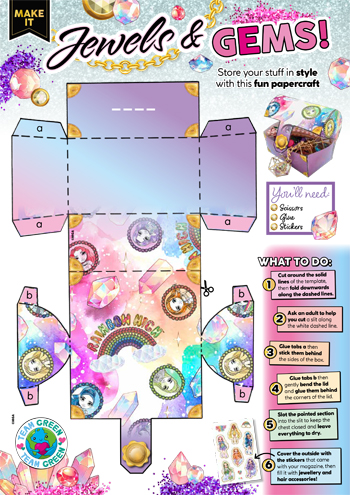
It is important to us that our children’s covermounts offer real play value and longevity. We never produced dolls whose legs fall off. But we have been able to focus on making our covermounts better quality, durable and multi-use, so that they give long lasting enjoyment and educational value. A figurine to paint can then turn into a keepsake or a gift for a friend. Counting blocks to decorate offer initial fun practising fine motor skills, before they are used for maths games. Shopping play sets can be kept and reused many times in imaginative play. Our collaboration with The Good Play Guide and research conducted by Dunnhumby validated that covermounted toys, when designed responsibly, support cognitive and creative development.
Furthermore, we have initiated a circular model of ‘retain and reuse’ which enables us to reuse covermounts from unsold magazines. We currently reuse some two million covermounts per year, preventing waste and minimising our need to produce new items. Where covermounts can’t be reused we’re keen that they should be recycled at end of life.
We are a founding partner of Wastebuster’s Recycle to Read programme – an innovative initiative building a sustainable solution for recycling hard plastic toys, which are not accepted in standard kerbside collections. Since its development, the programme has established toy recycling collection points in 167 Tesco stores nationwide, giving families a simple way to recycle responsibly while helping their chosen schools earn free books. Over 900 schools have already registered, representing over 250,000 children.
Print & paper value chain
We also strive to continuously improve the sustainability of our print and paper and have learned how to evaluate our options against our priorities. We considered the use of recycled papers, for example, but these typically come with a higher carbon footprint than stock from virgin fibres, and we decided that for us, the footprint was a more important metric at this time. We have made changes to page size and to specified papers which have reduced our carbon footprint and material use overall, whilst encouraging our paper suppliers to work on reducing their own impact. We have also been speaking to our printers for some years about our aspirations. Along with the rest of our portfolio, the Youth and Children’s magazines are now benefitting from greatly increased use of renewable energy at our main print sites. We’ve streamlined print and distribution processes where possible; for example, we were able to move the printing of BBC Match of the Day magazine to the same site as the mailing house to reduce transport emissions. Our paper suppliers are working on different transport methods, including replacing road transport by trains, to reduce transport emissions, and we are beginning conversations also around the magazines’ journey to retail to see what new steps can be taken there. This deep supply chain engagement and the support of our key suppliers are key elements in our journey towards increased sustainability.
Packaging
Magazine packaging is another impactful area for children’s publishers, and we have been able to make great strides in this area. Adaptability and flexibility are essential, as industry recommendations and material availability evolve constantly. For a while, along with other publishers, we used an additive in our polybags which made them ‘oxo-degradable’, so that they would break down when exposed to air and sunlight. But when research showed the potential problems with microplastic waste, industry recommendations changed, and we swiftly moved away from this solution. After investigating the alternatives, in 2019 we became early adopters of paper wrap for our subscription copies, which is now a very widespread choice. At the same time, we switched out our flexible plastic bags and wraps for more recyclable types, and started using plastic with 30% recycled content, whilst ensuring we only use polybags when there is no better alternative – for example where we are reusing bulky gifts which cannot easily be taped to a magazine cover. We have reduced our use of plastic bags and wrap as magazine packaging by 98% since 2018 and now aim to produce covermounts which don’t require the magazine to be packed into a polybag. By slightly changing the design and packing requirements of our covermounts, we have reduced the numbers of cartons required for transport. Future possibilities include investigating whether any paper wrap weights can be lightweighted to save material and shipping emissions.
Cultural footprint
It’s not only our physical footprint that we have been working on. As the home of trusted brands people love, we have the privilege and responsibility of positively communicating with audiences, engaging with content which brings them joy. We want to ensure that we use our voice for good. All our brands have signed up to our Climate Content Pledge: “Immediate will use its huge reach and exceptional talent to create relatable, entertaining and inspiring content. We want our audiences to understand the need for climate action, how it’s relevant to all our lives and how we can all be part of the solution. We aim to bring attention to critical issues, normalise sustainable choices and share narratives of positive change. We’re committed to integrating climate and nature positive content seamlessly across all our platforms and brands, reaching audiences of all backgrounds, to inspire collective action. We ask ourselves: ‘Does this feel like it was created in a climate emergency?’” This guiding principle ensures that our content can drive the change that is needed right now.
Even young readers of CBeebies and Bluey can be encouraged by fun, interactive pages to recycle and reuse household items and packaging, or to enjoy an enjoyable and healthy nature walk with their grown-ups. Crafting is always popular with pre-schoolers, and using items from around the house along with pictures cut out from our magazines, is a sustainable way of having creative fun.
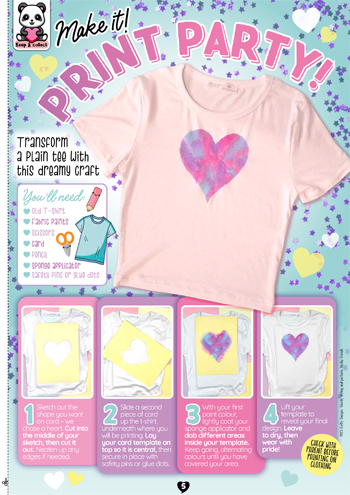
Titles such as Girl Talk and Rainbow High encourage thrifting and personalisation of clothes as an antidote to fast fashion, sneaking in compelling facts such as: ‘Did you know 500 bathtubs of water are needed to grow the cotton to make just ONE pair of jeans?’ Meanwhile, cut out and keep selfie sets, greetings cards and door hangers are a lovely, low impact addition to our covermount offerings on the magazines.
BBC Match of the Day magazine uses its focus on sport to encourage enjoyment of fresh air and being outside; and has been involved in the Green Football Weekend which brings clubs together to promote environmental sustainability. This magazine has also used the power of punning to ask its readers, ‘how green is your game?’ and encourage them to score ‘green goals’ by taking actions like recycling old kit or trying a plant-based food.
Collaboration
Our journey gathers most traction when we collaborate with our peers. The Children’s Forum has been key for us as has the PPA Sustainability Action Group, which has given vital advice around packaging materials, carbon footprint measurement and magazine recyclability. Products of Change provides information and webinars on sustainability for producers of branded and licensed products. We also work with Kids Against Plastic, the youth-led environmental charity, to integrate their voices and passion for change into our own approach.
It’s remarkable to look back and see how far we’ve progressed. The ways in which we have learned, flexed and developed as we’ve gone, and the partnerships we have forged will I’m sure stand us in excellent stead in wherever the journey takes us next.
This article was first published in InPublishing magazine. If you would like to be added to the free mailing list to receive the magazine, please register here.